Operating Health & Visibility Framework
OHVF is an Operating Intelligence Framework for product and technology organisations. It connects operational data, delivery signals, service reliability, product capability, governance, security risk and leadership context into a single model for understanding product health and deciding where to act.
Why this matters
Signals are fragmented
Delivery, service, risk, capability and governance data often sit in different tools and conversations.
Leadership lacks context
Dashboards show activity, but rarely explain what the signals mean, where ownership sits, or what action is required.
Teams lose time
Ambiguity, unclear ownership, repeat issues and weak operating rhythms create unnecessary stress and rework.
The OHVF model
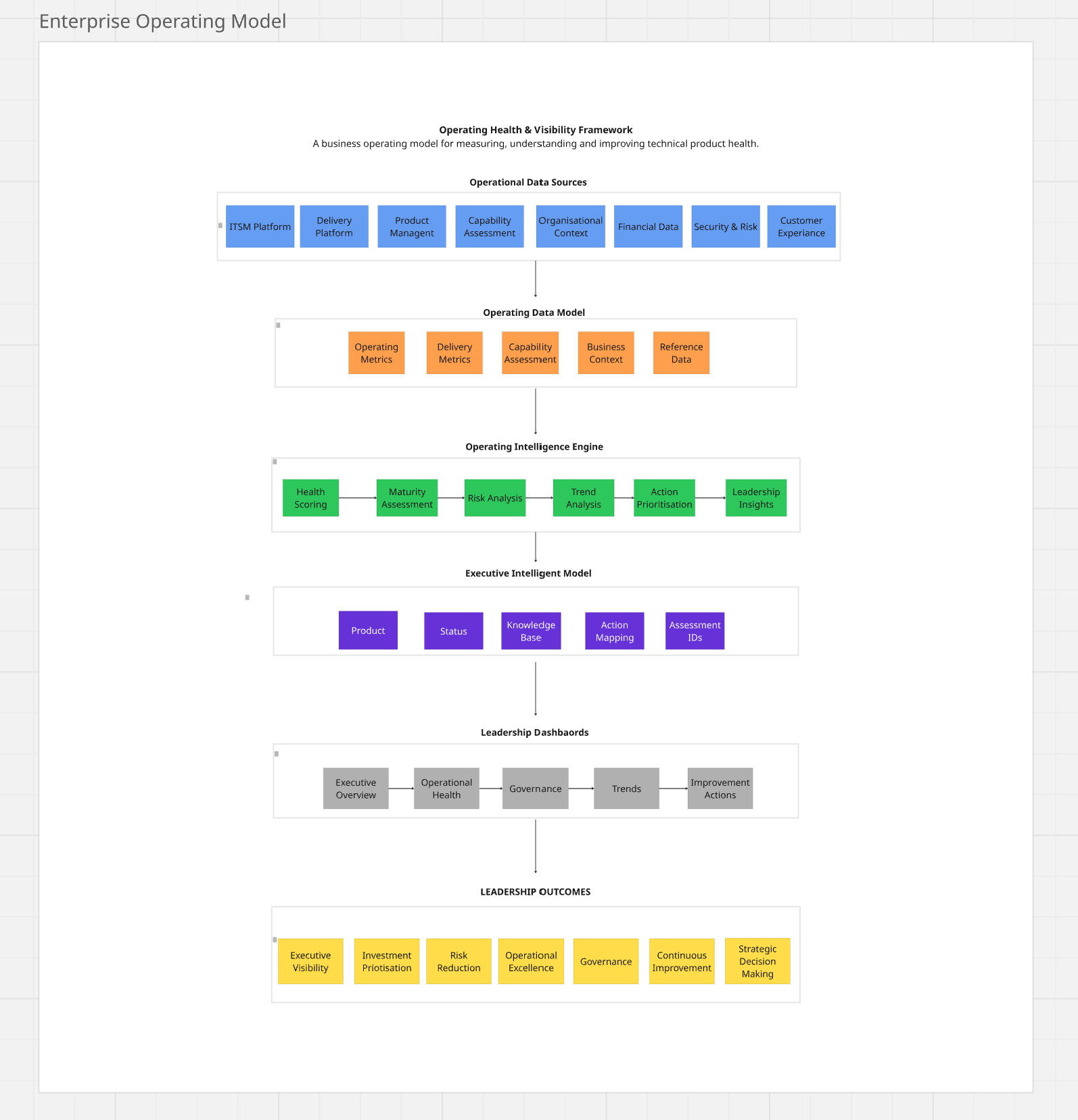
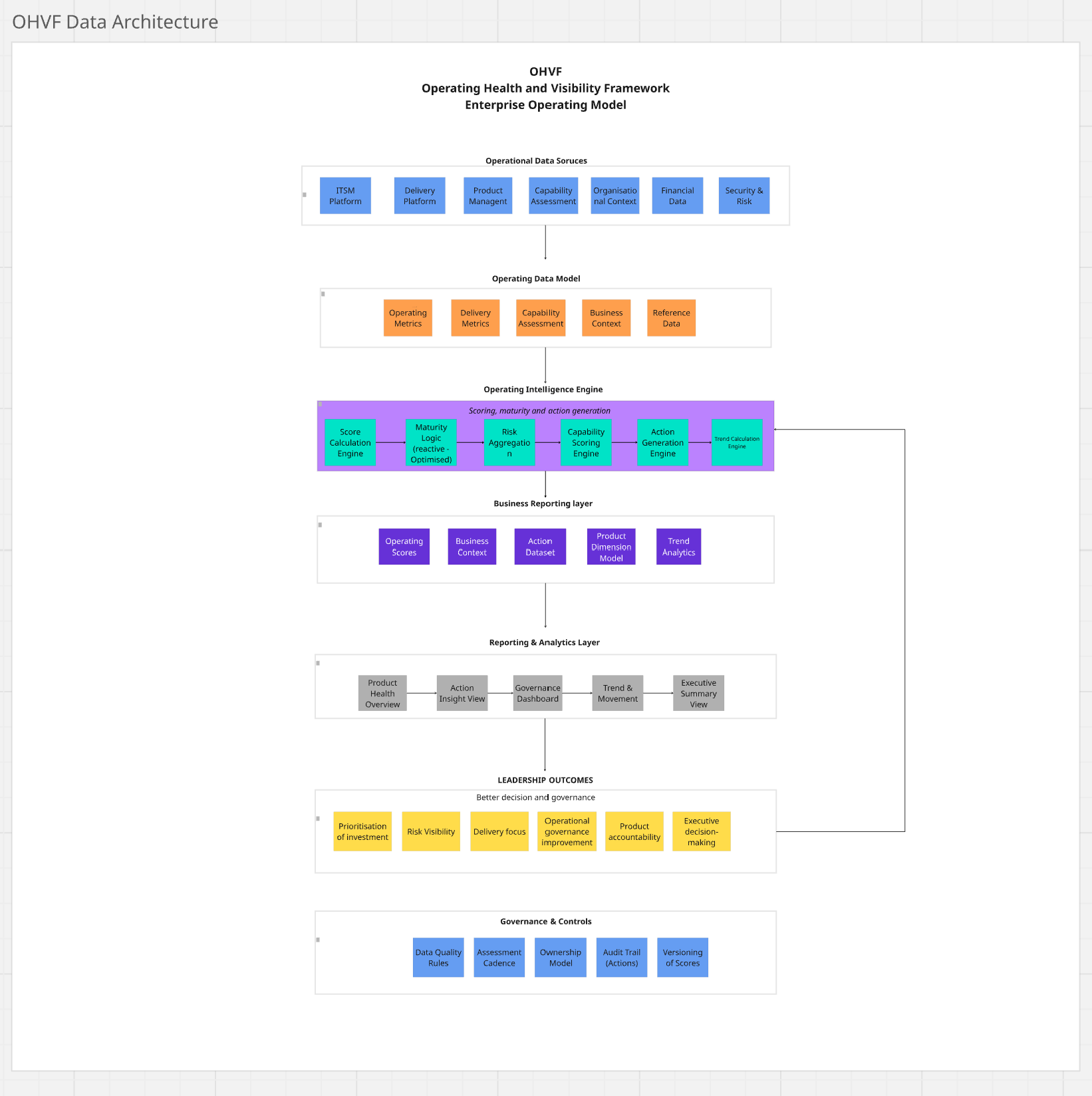
The framework is built as a complete operating model: data sources feed an operating data model, which powers an intelligence engine, action mapping, leadership dashboards and continuous improvement.
What OHVF assesses
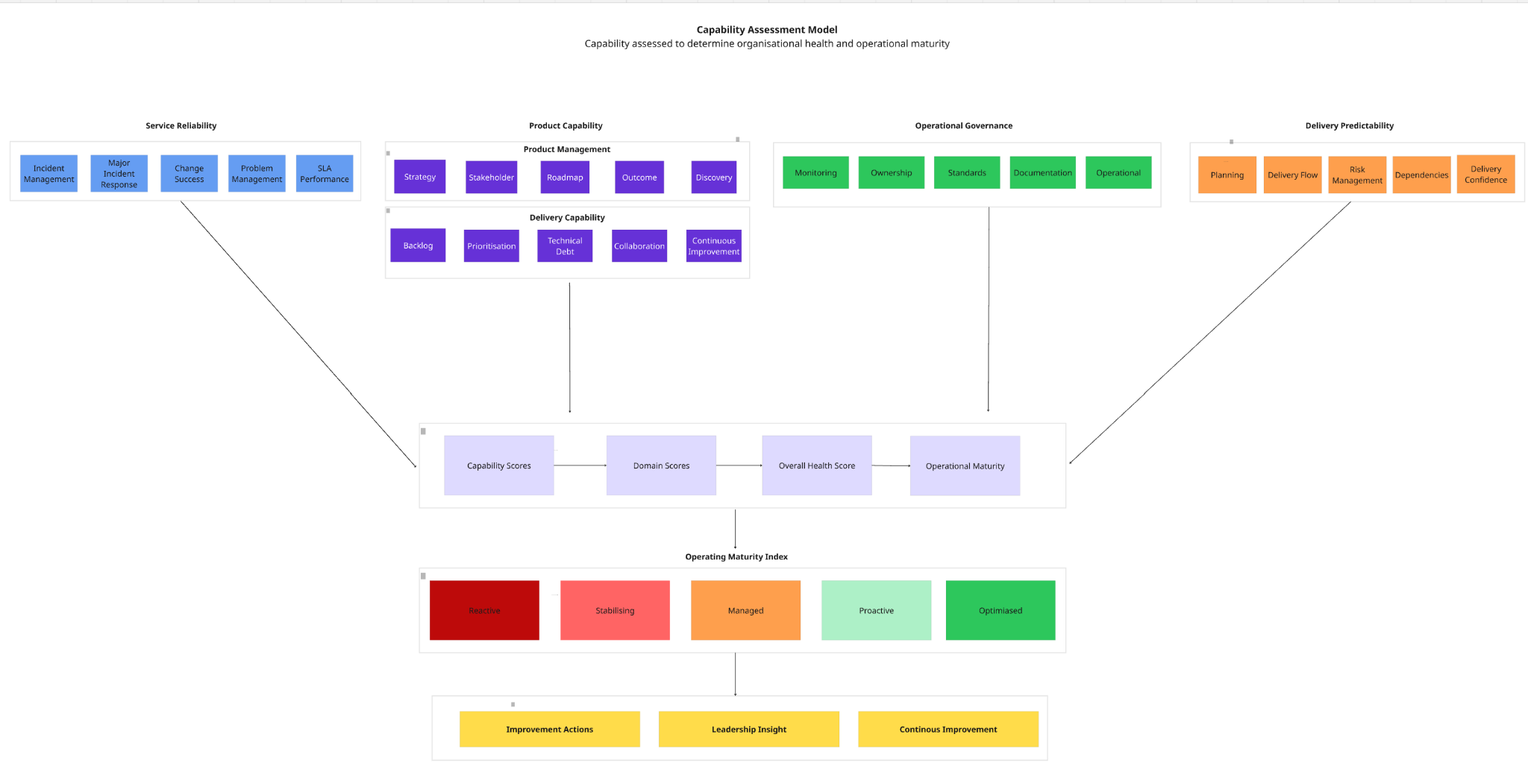
Service Reliability
Incidents, major incident response, change success, problem management and service performance.
Product Capability
Strategy, roadmap, outcomes, discovery, prioritisation, backlog quality and continuous improvement.
Operational Governance
Ownership, documentation, monitoring, standards, decision forums and operating discipline.
Delivery Predictability
Planning stability, flow, risk management, dependencies, impediments and delivery confidence.
Security & Risk
Security and operational risk signals connected to products, ownership, business impact and leadership decisions.
Business Context
Dependency type, operating model, product criticality, business impact and leadership priorities.
What you get
Operating health view
A clear view of where product and technology teams are healthy, stable, constrained or at risk.
Actionable leadership insight
Plain-language interpretation of what is driving risk, what needs attention and who should act.
Prioritised improvement actions
Targeted action plans linked to owners, supporting owners, due dates and governance tracking.
Executive decision support
Portfolio-level visibility for prioritisation, governance, risk discussion and investment decisions.
How this works
1. Discovery
Understand current operating pain, leadership priorities, available data and where visibility is weakest.
2. Architecture Mapping
Map the business architecture, data architecture and capability model needed to understand operating health.
3. Assessment
Assess product teams across service reliability, delivery predictability, product capability and operational governance.
4. Operating Intelligence
Turn data and assessment signals into scores, maturity views, trends, risk drivers and leadership insight.
5. Action Planning
Translate insight into practical actions with ownership, priority, governance and measurable follow-through.
6. Continuous Improvement
Use repeat assessments and trends to track movement, reduce recurring issues and improve operating maturity.
From reporting to operating intelligence
OHVF is not another dashboard. It is a structured way to connect operational signals with leadership decisions, so organisations can move from fragmented reporting to consistent understanding, prioritisation and action.
Advisory support
Operating Health Review
A focused review of current operating health, constraints, risks and improvement opportunities.
OHVF Implementation
Design and implement a tailored operating intelligence framework across selected product and technology teams.
Ongoing Advisory
Monthly support to mature the model, embed governance, review insights and support leadership decision-making.
Request a discovery conversation
This takes less than a minute and helps me understand the context before a short discovery conversation.